Angkor Wat Photography Tips: How to Get the Best Photos at Sunrise and Beyond

Best Time to Visit Angkor Wat for Photography

If you’re visiting Angkor Wat, you’re going to take photos – but getting great photos is not as simple as just turning up. The timing, positioning, and crowds all play a huge role in the final result. This guide covers practical Angkor Wat photography tips to help you capture better images, whether you’re using a phone or a camera, shooting portraits or the surroundings.

Best Time to Visit Angkor Wat for Photography

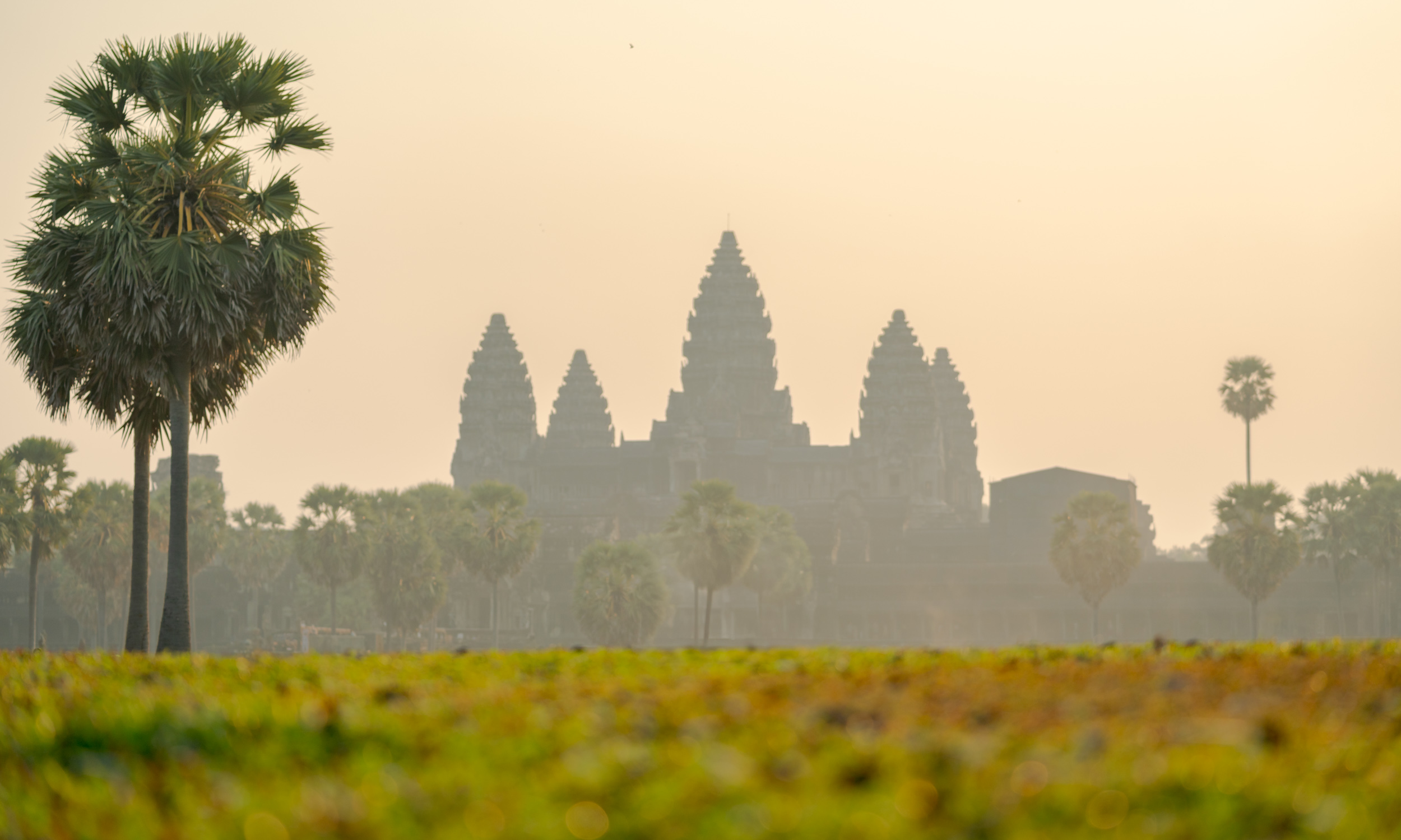
Sunrise is the most popular time to photograph Angkor Wat. The light is softer, temperatures are lower, and the temple faces east, so it catches the first light of the day.

It starts to get light at around 6:00am, although the sky may begin to change earlier depending on the conditions. Some mornings produce strong colour in the sky, while others stay more muted.

The main crowd gathers around the reflecting pool to watch the sunrise. If you want a position at the front, you need to be among the first people entering the temple complex when it opens at 5:00am, so arriving early and queuing is often necessary.

Alternatively, you can visit Angkor Wat in the late afternoon, for the afternoon golden light. You may also catch sunset but this depends on the time of year as the temple closes at around sunrise time. Angkor Wat can also be hotter and more crowded in the afternoon.

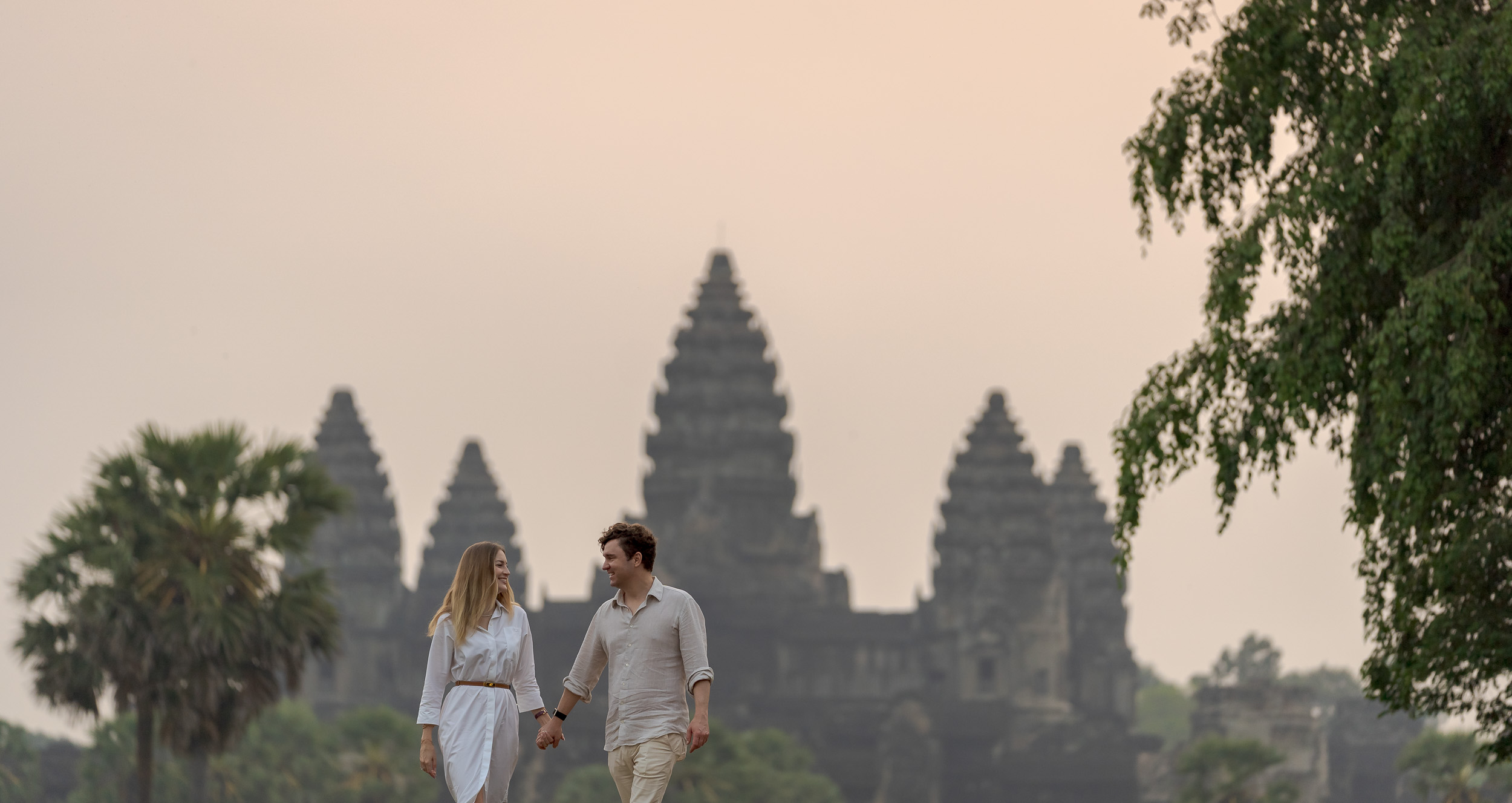
In the morning, with the façade of Angkor Wat in the background, your photos will be backlit, while in the afternoon you will be front lit.

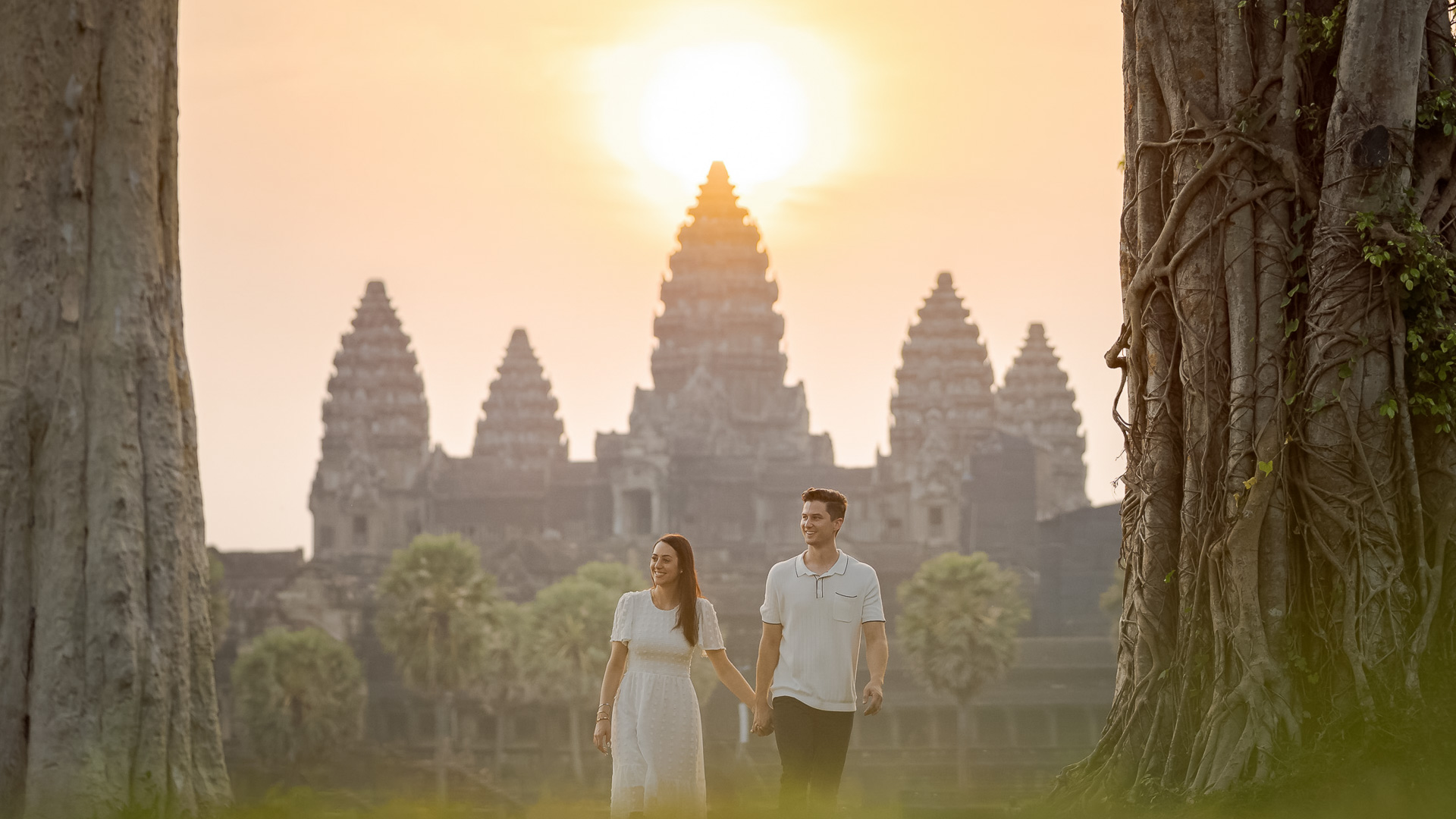
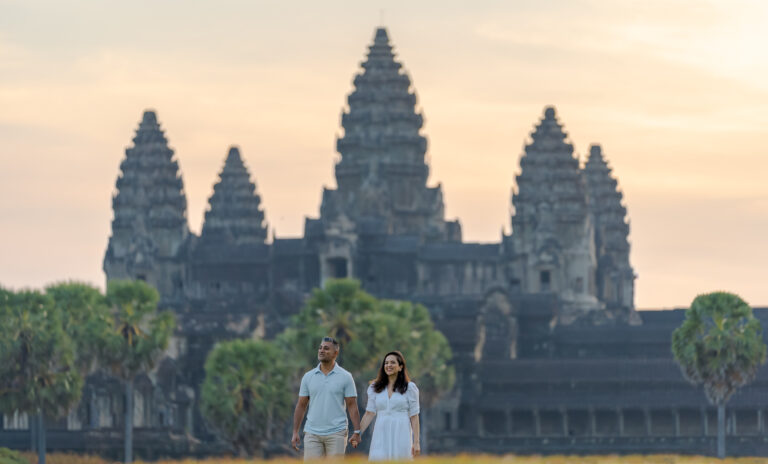
Couple at angkor wat on a siem reap photographer photoshoot
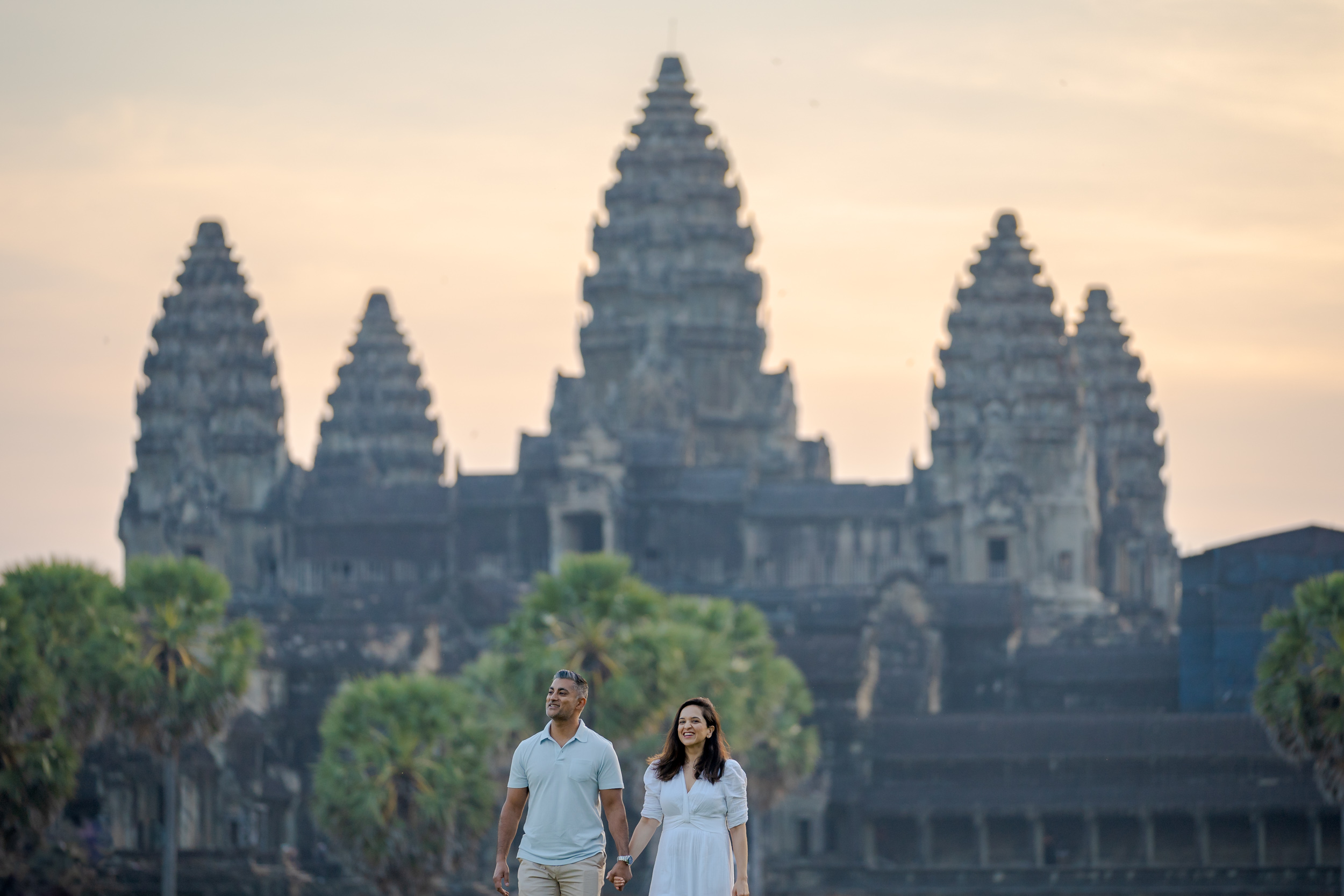
Couple at Angkor Wat, just after sunrise

Best Photo Spots at Angkor Wat (Avoid the Crowds)

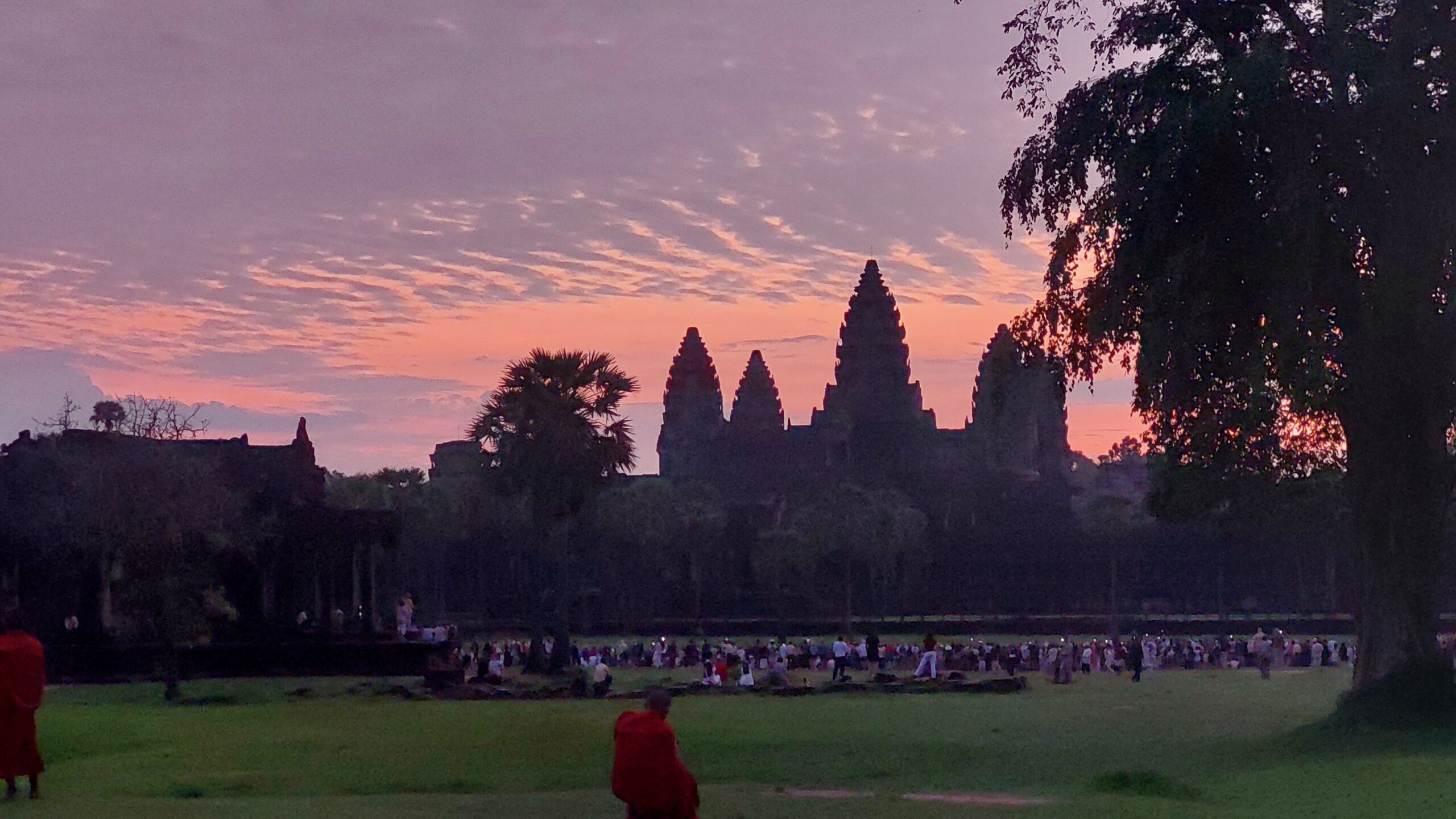
Currently, the southern reflecting pool is the most popular photography spot at Angkor Wat because of the famous reflection, but it’s also the busiest. Large groups gather here each morning to watch the sunrise, all shooting the same view.

Moving away from that main crowd opens up other options. A few spots around the temple grounds give you a similar view with far fewer people in frame, and more freedom to experiment with angle and composition. Here are some worth knowing before you go.

Quiet Spot Behind the Reflecting Pool

Angkor Wat sunrise photography with crowds at reflecting pool and quiet viewing area in foreground
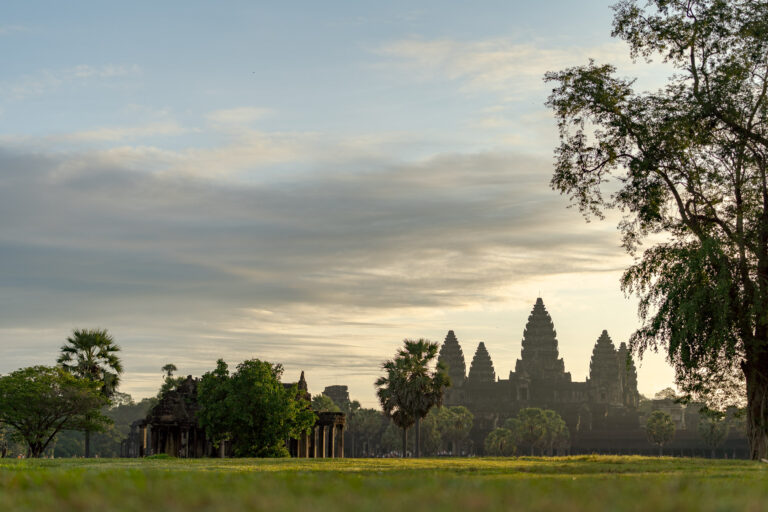
Here is the uncrowded area of Angkor Wat, back from the crowds gathered at the reflecting pool to watch sunrise.

This area of Angkor Wat sits just behind the main crowd gathered at the reflecting pool. The ground rises slightly then dips back down toward the pool, and that small change in elevation is enough to block most people from your frame while keeping the same view of the temple. Stepping back here gives you space to slow down and experiment with composition instead of shooting over someone’s shoulder.

Getting down low works particularly well from this position, using the grass or a rock as foreground, which is what the next few images show.

Angkor Wat at sunrise shot from gound level with no crowds
Shooting from a low angle here cuts the crowd from the reflecting pool out of frame
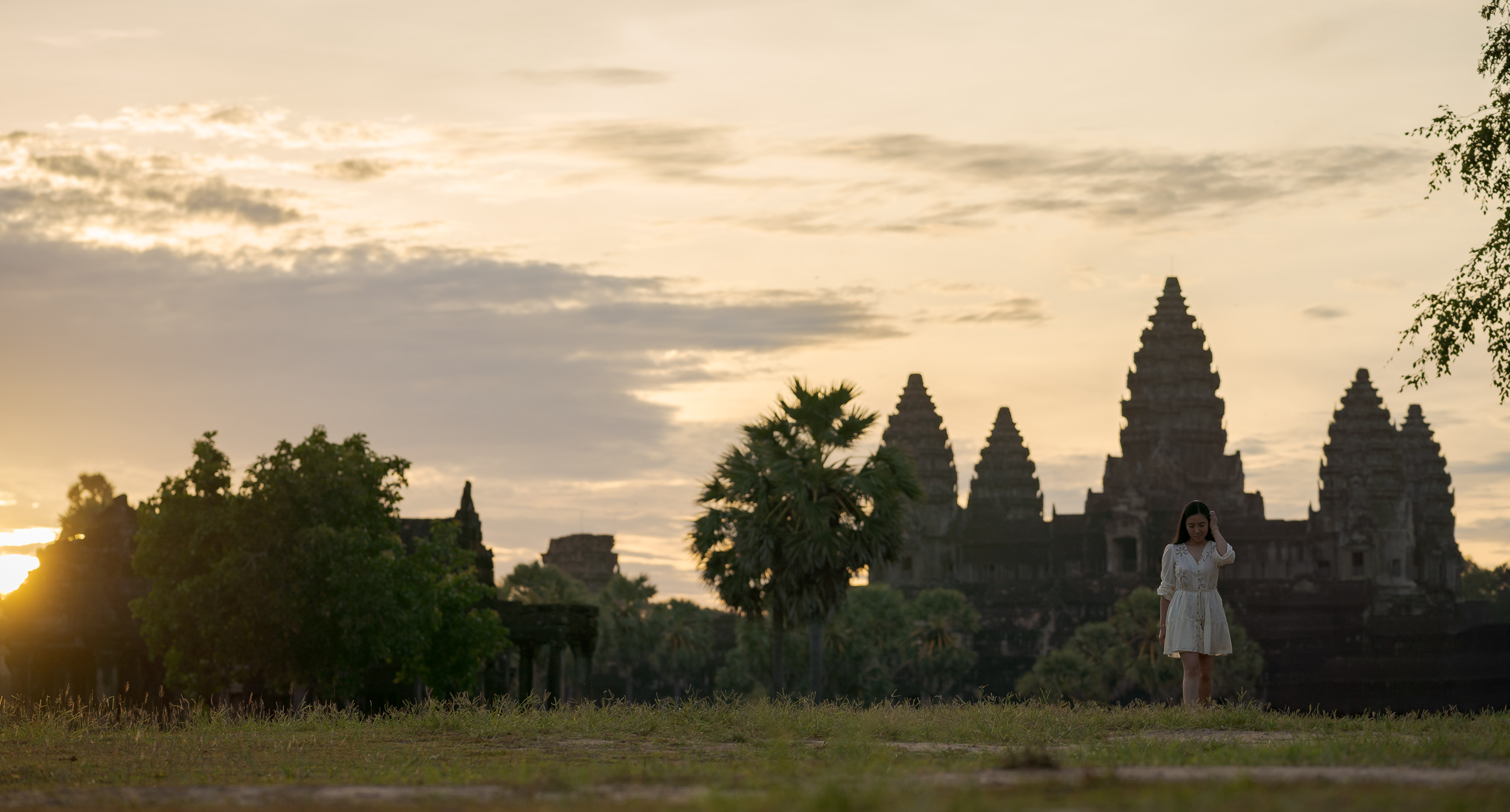
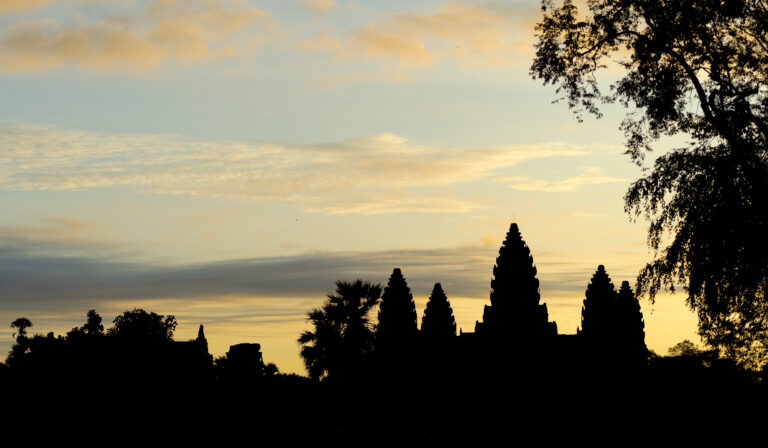
Angkor Wat silhouette at sunrise, photographed from ground level with grass in the foreground"
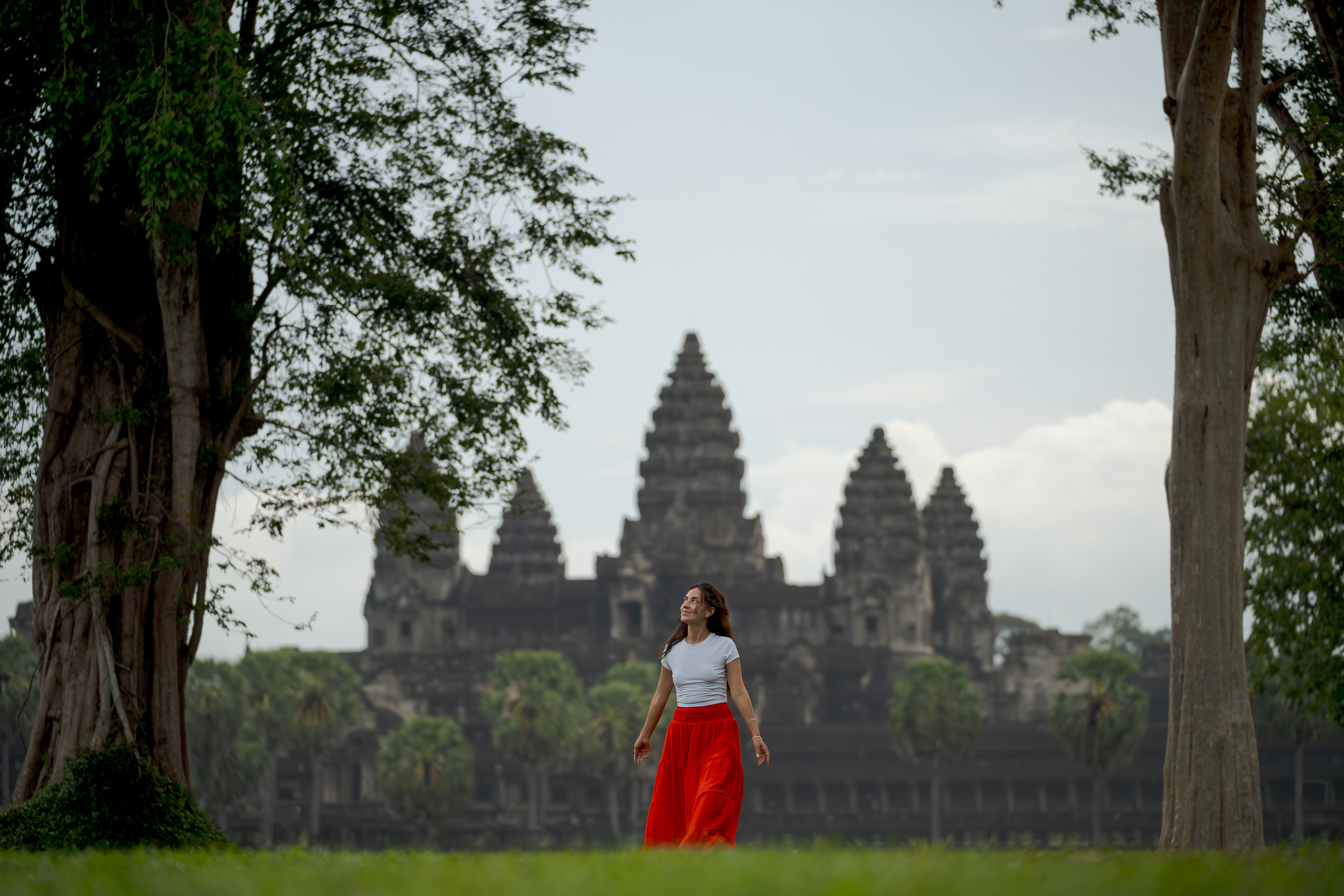
A guest during a sunrise photoshoot, positioned away from the crowd at the reflecting pool

In Front of the Southern Reflecting Pool

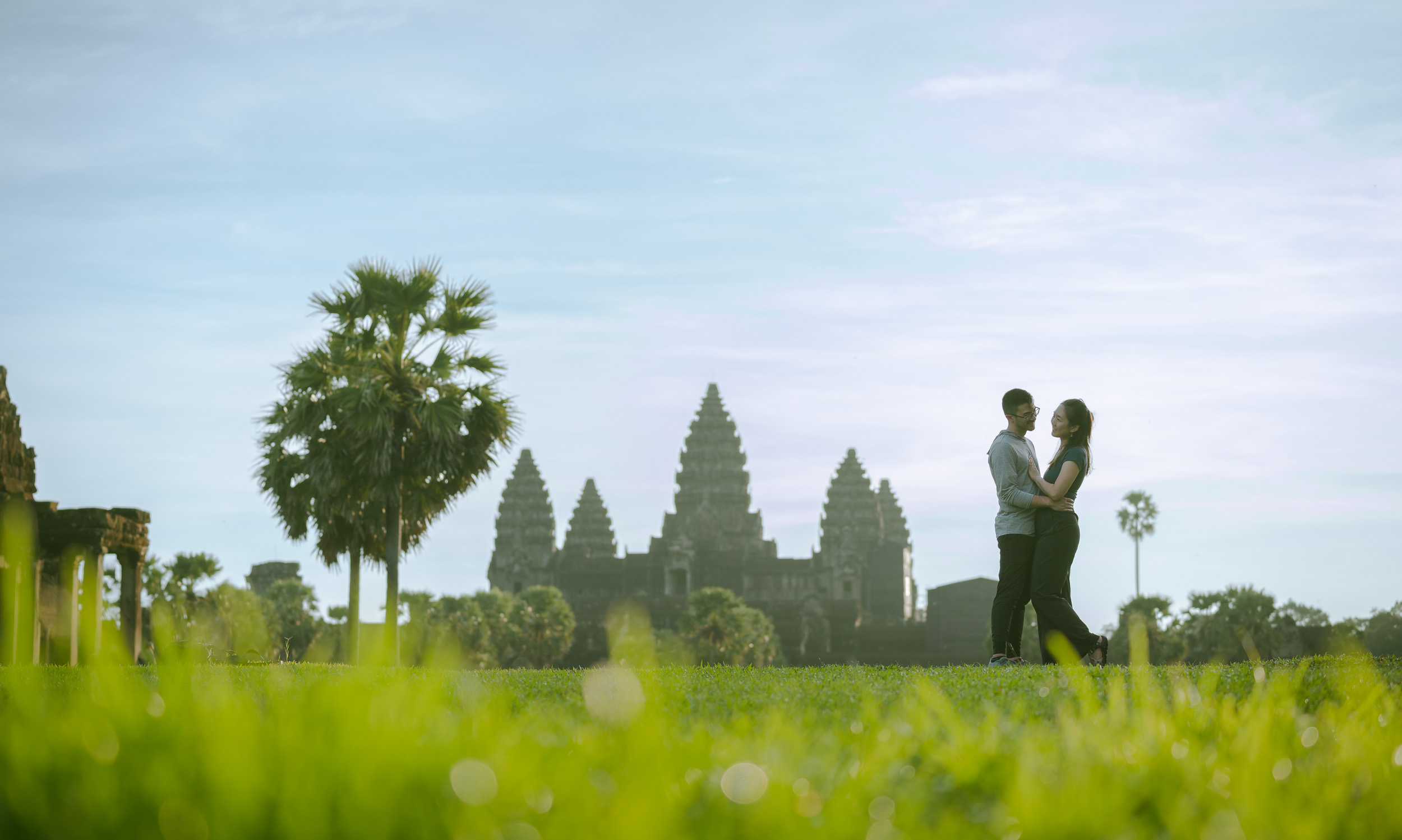
This area of Angkor Wat sits further along from the main reflecting pool, on the southern side of the grounds. Once sunrise finishes and the crowd starts to move, most visitors head straight for the central entrance to continue exploring the temple. That leaves this area noticeably quieter for a short window right after.

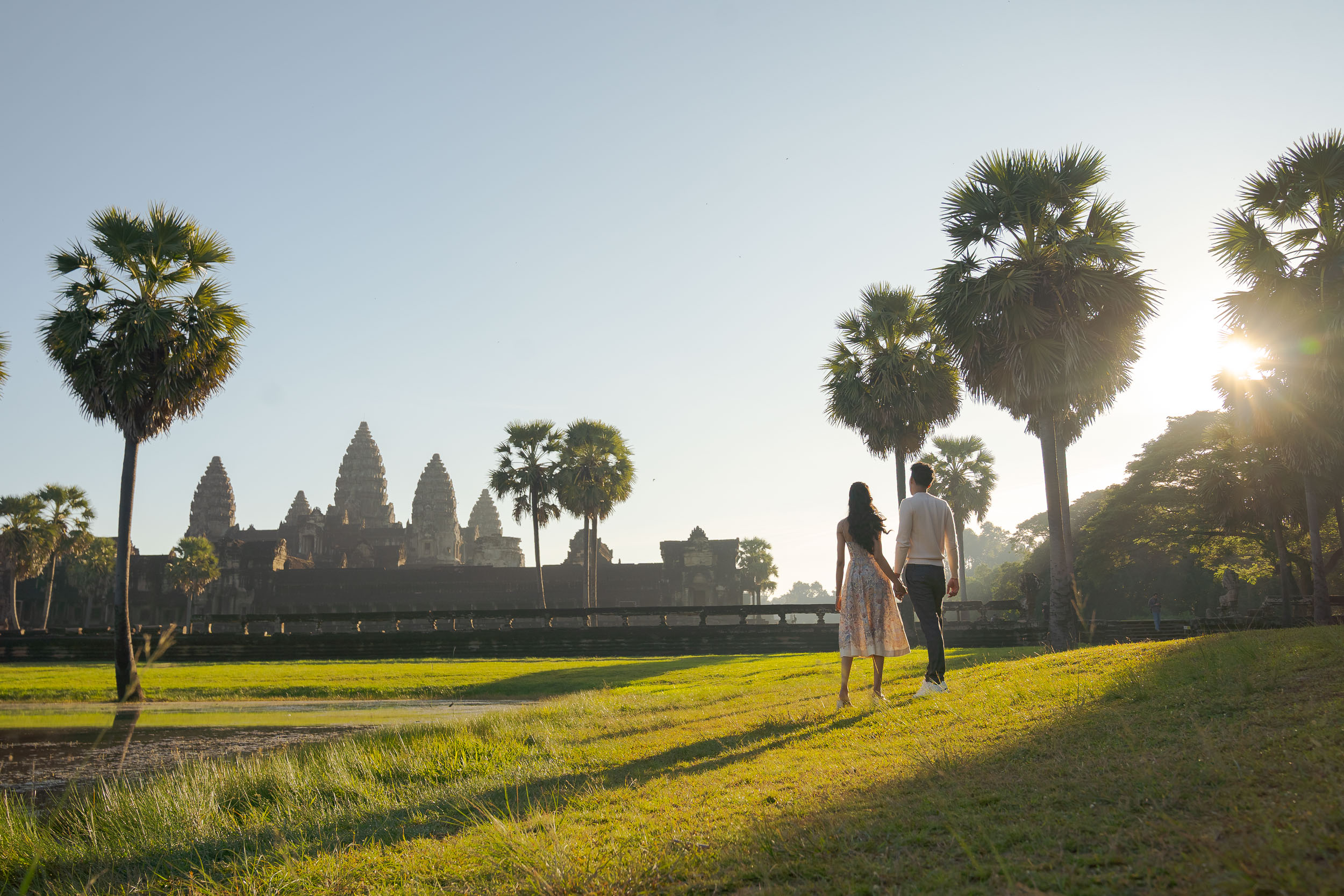
It’s a good spot if you want a bit more space and time to work with, without rushing to beat the crowd to a position. The palm trees along this side also give you a different framing option to the classic reflecting pool shot.

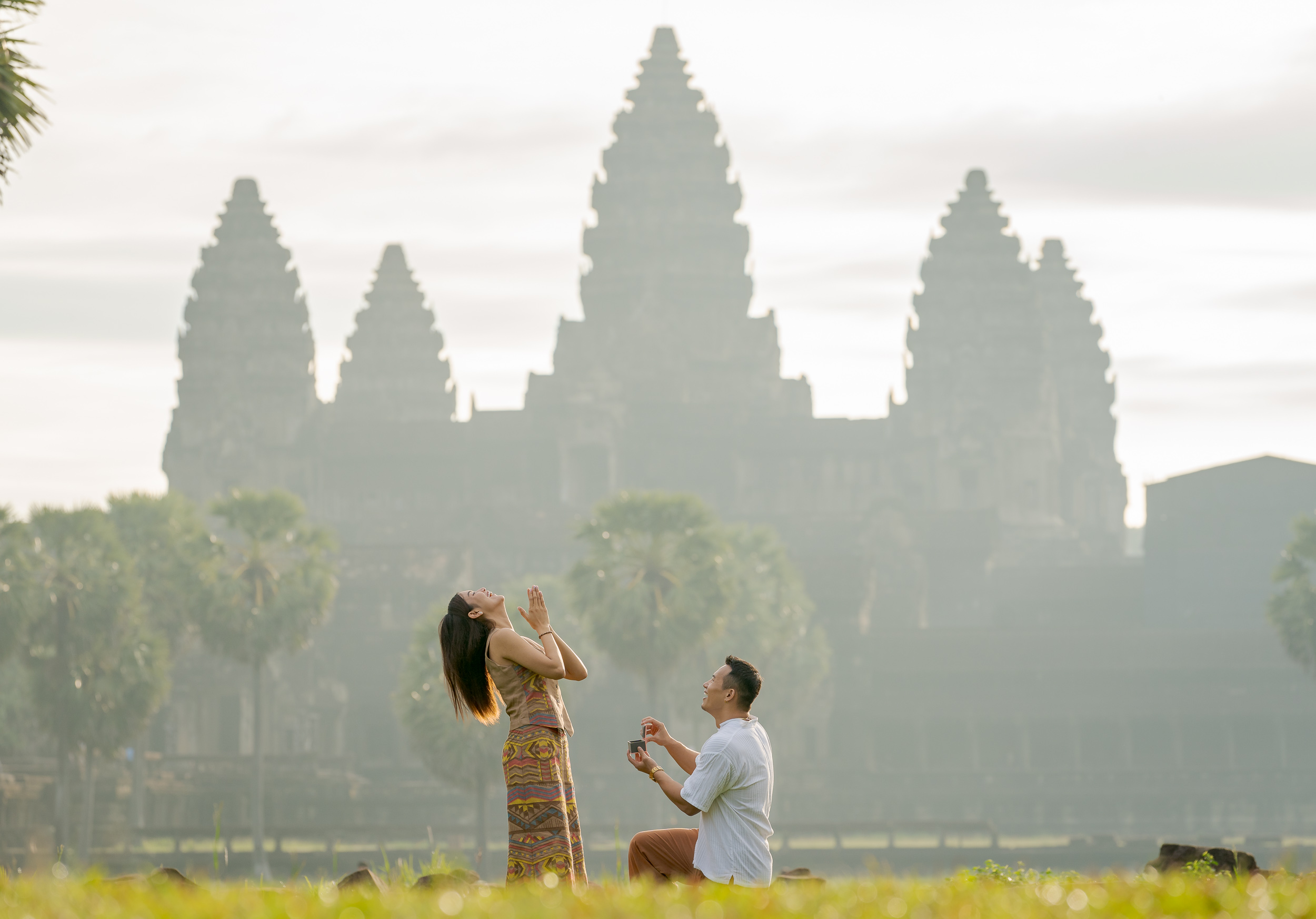
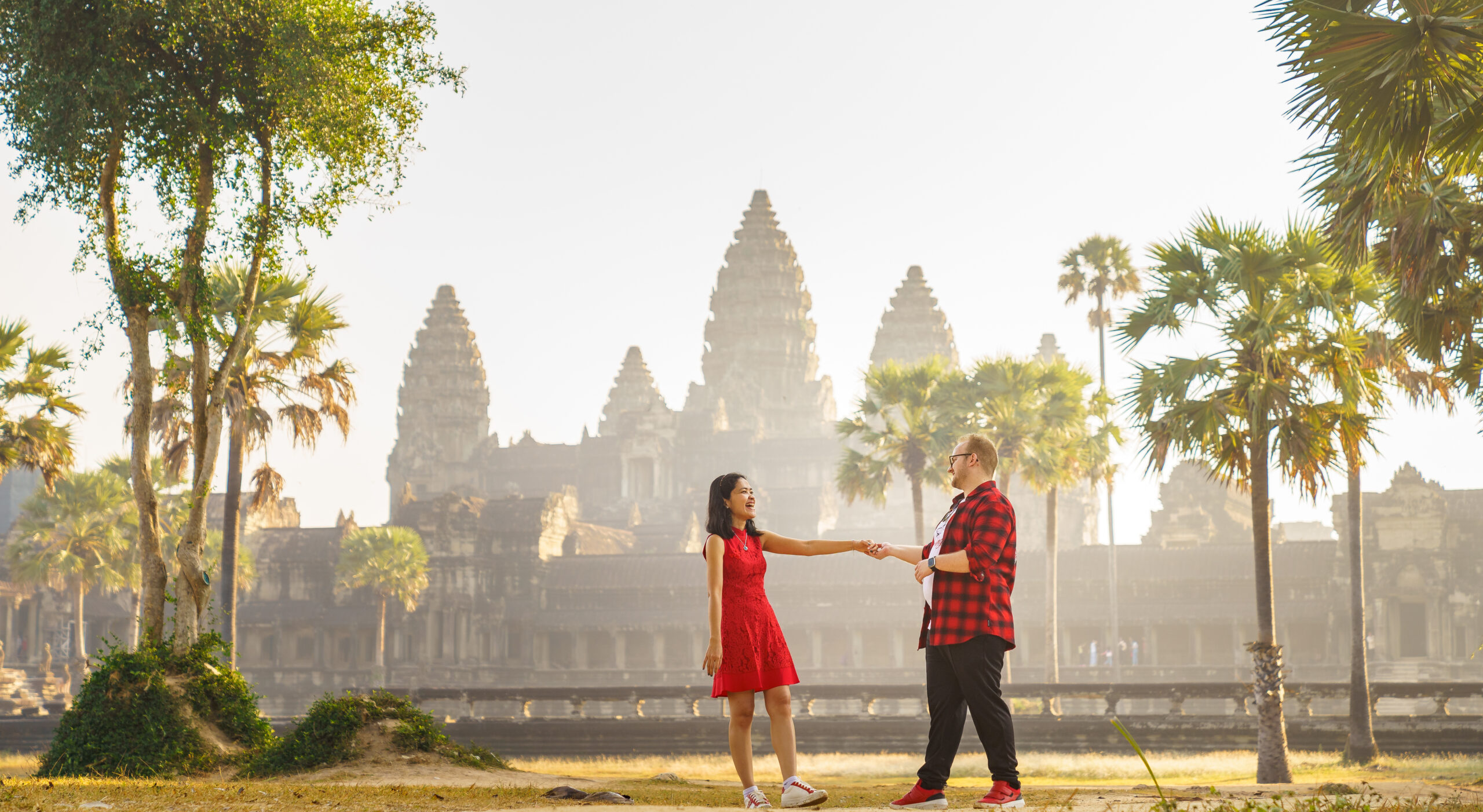
Couple during a proposal photoshoot near the southern reflecting pool at Angkor Wat, palm trees framing the temple in morning light
A couple during their proposal photoshoot near the southern reflecting pool, timed just after the sunrise crowd had thinned out

Other Photography Spots at Angkor Wat

While the main sunrise view is the most well-known, there are many other areas within Angkor Wat that offer excellent photography opportunities with fewer people.

After you’re satisfied with your outdoor Angkor Wat sunrise pictures, you can head inside, where the light is still important, but less so than when you’re outdoors.

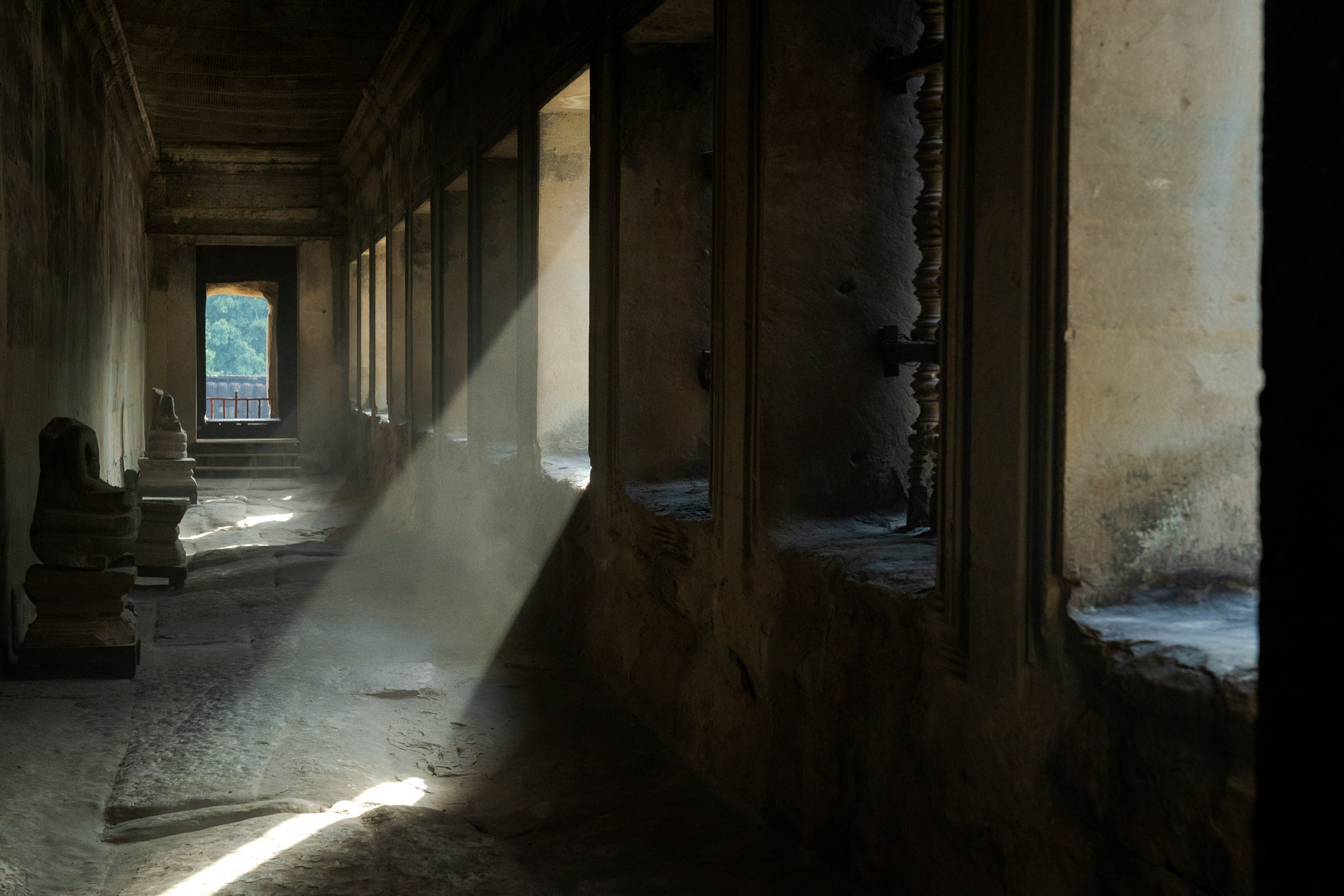
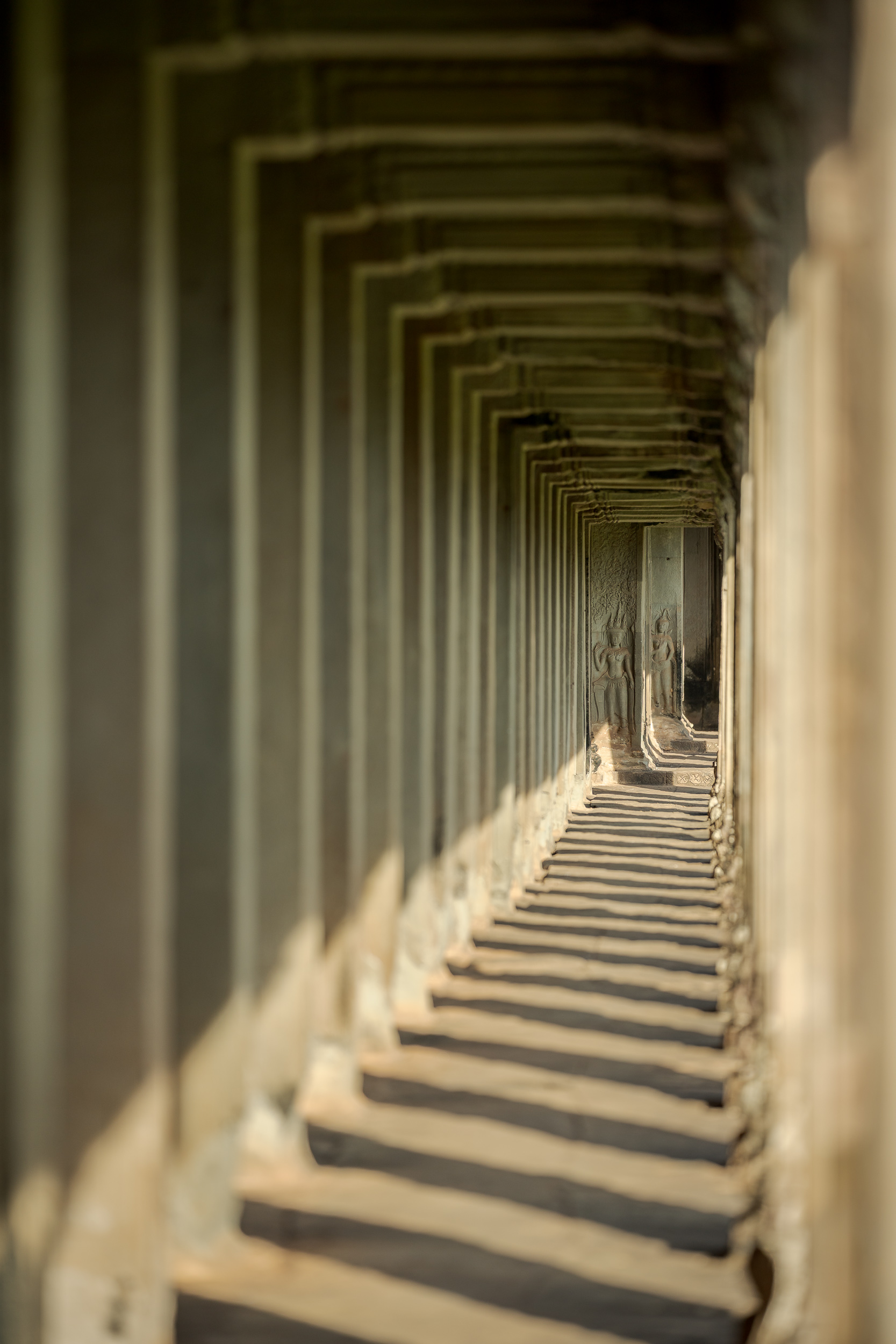
The temple corridors are one of the best places to shoot. The long stone walkways create strong leading lines, natural framing, and soft directional light, especially in the early morning. These areas are usually much quieter than the main courtyard, making them ideal for more composed and relaxed images.

You can also use the doorways and archways to frame your subject, adding depth and structure to your photos. The contrast between light and shadow in these spaces helps create more interesting and dynamic images compared to shooting in open areas.

Exploring different parts of the temple, including side galleries and less busy corners, will give you a wider range of photos and a better overall result from your visit.
Angkor Wat corridor with light rays and stone columns for photography
Angkor Wat corridor with repeating stone columns and leading lines
Angkor Wat corridor with light rays and stone columns for photography

Professional photography at Angkor Wat at sunrise by Siem Reap Photographer

Common Mistakes Tourists Make When Taking Photos

One of the biggest mistakes is arriving too late. By the time the sun rises, the light gets harsher and the soft morning light is gone.

Another common issue is focusing only on the standard sunrise shot. This often leads to similar images taken from the same position. Moving around and exploring different viewpoints gives you more variety.

Lighting is also overlooked. Strong daylight later in the morning can reduce depth and detail, which is why early morning is usually the best time to shoot.

What to Wear for Photos at Angkor Wat

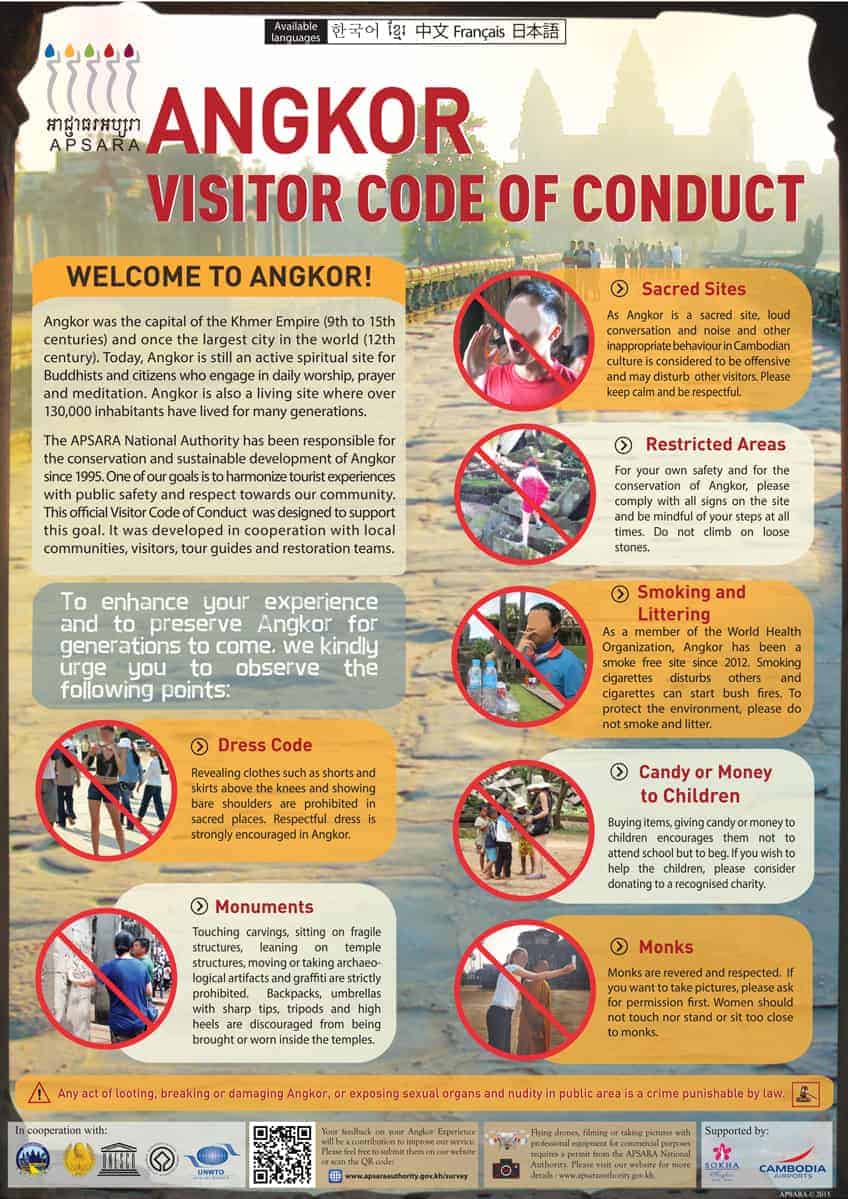
Angkor Wat is an active religious site, so modest clothing is required. Shoulders and knees should be covered when entering the temple. See the Angkor Code of conduct.

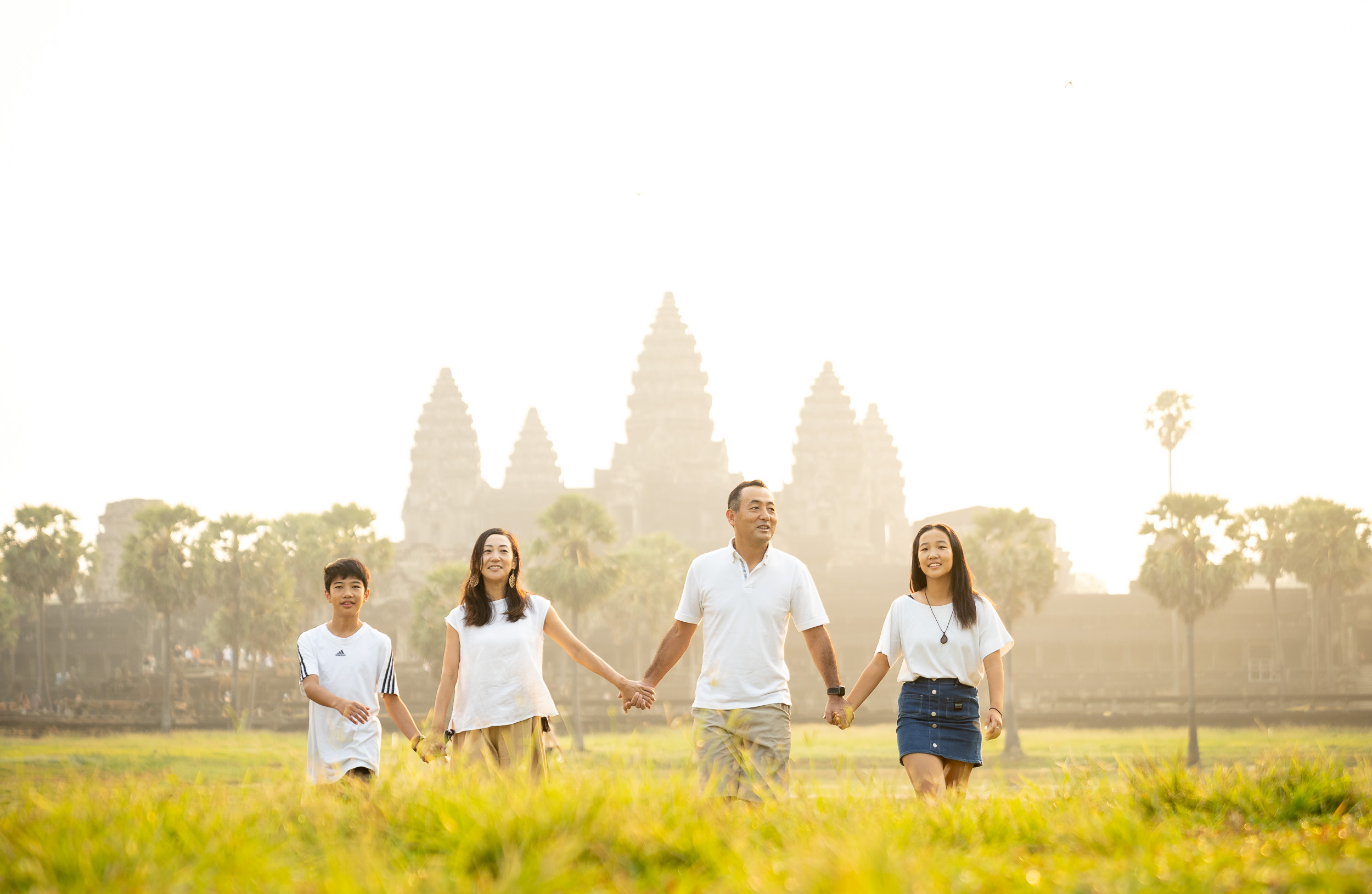
 For photography, lighter tones and simple clothing tend to work well against the darker stone of the temple. Avoid busy patterns, as they can draw attention away from the subject.

Comfort is important, as you will likely be walking and standing for extended periods, especially if you arrive early.

To see more tips about what to wear for a photoshoot, see my tips about what to wear for an Angkor Wat photoshoot.

Couple at Angkor Wat on an Angkor Wat photoshoot with Siem Reap Photographer

Blue and white work well as an easy outfit choice.

Tips for Photographers at Angkor Wat

Framing

You can improve your photos by focusing on positioning, timing, and awareness of your surroundings.

Take a few moments to adjust your position and look for angles that reduce distractions. From the further back from the crowds position, shooting slightly upward from a low position can help remove people from the background and make the temple feel more prominent.

Waiting for small gaps in the crowd or changes in light can also make a noticeable difference in your final images.

Angkor Wat at sunrise

Camera Gear

When photographing Angkor Wat and the surrounding temples, your lens choice will have a big impact on the type of images you can create. The environment is varied, with tight corridors, towering structures, and open spaces, so flexibility matters more than having a large kit.

A 24–70mm lens is one of the most useful all-round options. It is wide enough to capture the scale of the temples while still allowing for natural-looking portraits. This makes it ideal for most situations inside Angkor Wat, where you often need to balance architecture and people in the same frame.

For more compressed, cinematic shots, a 70–200mm lens can produce beautiful results, especially when shooting from a distance. This is particularly effective outside Angkor Wat, where you have more space to step back and isolate your subject against the temple. The compression helps simplify busy scenes and can create a more refined look.

However, inside the temples and in tighter areas, a 70–200mm becomes far less practical. You will often struggle to fit enough of the structure into the frame, and unless you are focusing on small details, it can feel limiting. It is also a large and heavy lens to carry for long periods, especially in the heat.

In most cases, travelling light with a versatile zoom will give you more freedom to move, react, and compose your shots effectively.

Angkor wat silhouette at sunrise
Angkor Wat at sunrise
How to Prepare Your Gear for Humidity at Angkor Wat

A common mistake many photographers make when shooting Angkor Wat sunrise is not preparing their gear for the humidity. Cameras are often kept overnight in a cold, air-conditioned hotel room, then transported in a sealed camera bag to the temples in the early morning.

When you arrive and take your camera out into the warm, humid air, condensation can instantly form on your lens and even inside the glass. This fogging can last much longer than expected, sometimes 20 to 30 minutes or more, which means you risk missing the best light at sunrise.

To avoid this, it is important to let your gear gradually adjust to the outdoor temperature. One simple approach is to store your camera somewhere less affected by air conditioning overnight, such as the bathroom or another area with more ambient temperature. This reduces the temperature difference and helps prevent condensation.

Another option is to take your camera out of the bag earlier and allow it to acclimatise before shooting. A little preparation here can make a big difference and ensure you are ready to capture the best conditions when the light peaks.

Interested in an Angkor Wat photography tour? Check out our Angkor Wat & Siem Reap Photography Tours for passionate photographers.

Should You Hire a Photographer at Angkor Wat?

For many visitors, Angkor Wat is a once-in-a-lifetime experience, and capturing high-quality photos can be challenging when dealing with crowds and changing light.

A local photographer understands where to stand, when the light works best, and how to guide positioning. This helps you get strong images while staying relaxed and focused on the experience.

If you would like natural, well-composed photos during your visit, you can view Angkor Wat photography packages here.

Final Tips for Capturing Great Angkor Wat Photos

Arrive early, stay flexible with your positioning, and take time to explore different viewpoints. Some of the best images come from stepping away from the busiest areas and paying attention to light and composition.

With the right timing and approach, you can capture photos that feel well-balanced, even during busy periods.

If you are considering a professional photoshoot at Angkor Wat – see our photoshoot packages.

More Angkor Photography Tips and Visitor Guides

Angkor is much more than Angkor Wat. While the main temple is the most well-known, there are many other temples across the Angkor complex that offer different atmospheres, fewer crowds, and excellent photography opportunities.

From Ta Prohm with its overgrown trees to the stone faces of Bayon, each location gives you a completely different setting to work with. Exploring beyond Angkor Wat allows you to capture a wider range of images and experience more of what Angkor has to offer.

You can explore my guide to the best photography locations in Angkor for more information on photography spots in Angkor.

If you want to improve your own photography while exploring the temples, I also offer Angkor photography tours, combining practical photography guidance with time at some of the best locations around the Angkor complex.

For more detailed information about visiting Angkor Wat, Siem Reap Photographer contributes first-hand photography and visitor information to the Connect Cambodia Angkor Wat Guide.

About the author

Geoff Greenwood is a professional photographer based in Siem Reap, Cambodia. Geoff has spent years photographing Angkor Wat and the temples of the Angkor Archaeological Park, working with changing light, seasons, crowds and conditions throughout the year. His Angkor photography guides are based on his own experience photographing the temples.